Is milkweed poisonous?
Milkweed is genuinely toxic, but the practical risk in a garden is low. The species that cause real harm are the narrow-leaved ones, and the usual route is contaminated hay.
What makes milkweed toxic
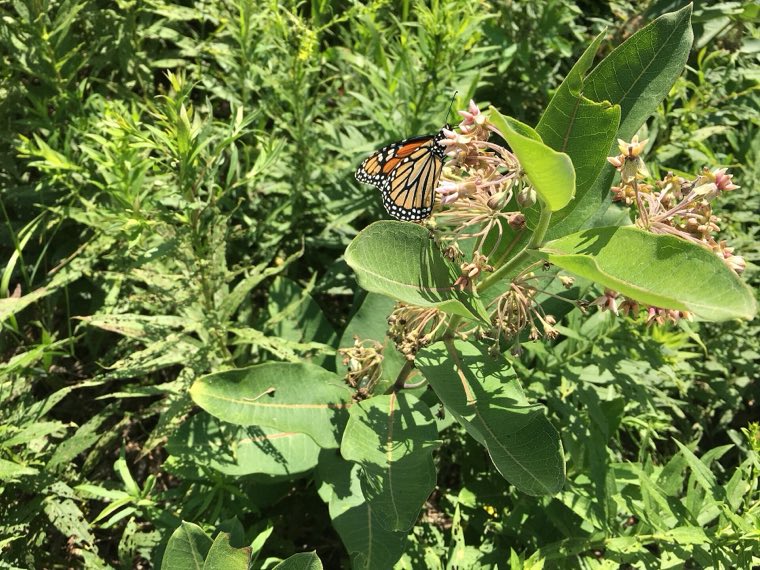
Milkweeds contain cardiac glycosides, or cardenolides, the same class of compound as digitalis from foxglove. They inhibit the sodium-potassium pump that cells use to maintain electrical balance, which in animals means disrupted heart rhythm.
Some species additionally contain neurotoxic resinoids, and it is these, more than the cardenolides, that produce the tremors and seizures seen in severe livestock poisoning.
Concentration varies enormously between species. As a general rule the narrow-leaved and whorled species carry much higher concentrations by weight than the broad-leaved ones. Whorled milkweed, poison milkweed and woollypod milkweed are among the most dangerous; butterfly weed is among the mildest.
Dogs and cats
Milkweed is toxic to dogs and cats, but poisoning is uncommon. Pets rarely eat it: the latex is bitter and irritating, and animals normally stop after one mouthful.
Signs of ingestion include drooling, vomiting, diarrhoea, dilated pupils, weakness, tremors and, at higher doses, irregular heartbeat, collapse and seizures. Sap in the eye causes intense irritation and can damage the cornea.
If your dog eats milkweed, do not wait for symptoms. Call your vet or the ASPCA line with the species name if you know it and an estimate of how much was eaten. Prognosis is generally good with prompt treatment.
Practically: if you have a dog that chews plants indiscriminately, put milkweed in a bed the dog does not use. Most households with dogs and milkweed have no incident at all.
Horses
Horses are the domestic animal most at risk, and the danger is disproportionately from hay, not pasture.
Milkweed retains its toxicity when dried, and a horse that would never graze around a milkweed in a field will eat it without hesitation baled into hay. As little as 0.1 percent of body weight of whorled milkweed can be fatal, under a pound for an average horse.
Signs include colic, muscle tremors, staggering, rapid or irregular heartbeat, difficulty breathing, seizures and death. This is an emergency; call a vet immediately.
There is no treatment once it is baled, so prevention is what matters: know your hay source, inspect hay for milkweed stems, and control whorled and poison milkweed on hay ground and in paddocks. This is the one context where removing milkweed is clearly the right decision.
Cattle, sheep and goats
Same story. Sheep are especially susceptible, and most historic poisonings involve animals on overgrazed range where the palatable plants are gone and milkweed is what remains. Well-managed pasture with adequate forage rarely produces cases, because livestock avoid milkweed by choice.
People
Milkweed should not be eaten. Cases of human poisoning are rare and almost always involve foraging errors or consumption of raw plant material.
The everyday risk is contact, not ingestion. Skin contact causes irritation and, in sensitive people, a rash. Wear gloves when cutting stems, wash your hands afterward, and keep your hands away from your face.
Sap in the eye
Latex in the eye is the milkweed injury most likely to need a doctor. It causes pain, blurred vision and swelling of the cornea that takes days to clear. There are published case reports:
- A 70-year-old woman had pain and blurred vision in one eye after handling butterfly weed, with swelling through the corneal stroma and small breaks in the surface. It cleared in 96 hours on steroid and antibiotic drops, and her vision was 20/20 nine months later. (case report)
- A 74-year-old man had swelling in both corneas six weeks after cataract surgery and was treated for a postoperative infection. The cause was balloon plant latex, and it cleared in six days once that was identified. (case report)
- A young farmer, with damage to the corneal endothelium from tropical milkweed. (case report)
- A child, also from tropical milkweed. (case report)
The cause is the same cardenolides that poison a horse. The sodium-potassium pump they block is what keeps the cornea clear of fluid, so the cornea fills and swells.
Flush the eye with water for 15 minutes and get it seen. Both cases above that report an outcome recovered fully, and both were treated with drops rather than anything more serious.
Two things are worth knowing. If you have had eye surgery recently, take more care than usual: a healing cornea has less to spare, and in the cataract case the recent surgery is what sent the diagnosis down the wrong path for six weeks. And say what you were handling, because this is not something a doctor will necessarily have seen before.
Some milkweed species have a long history of use as food when correctly prepared, and various tribes used the fiber and the latex. None of that makes casual consumption safe, and identification errors, since dogbane is far more toxic and grows in the same places, make foraging a poor idea.
Which species are riskiest
| Risk | Species |
|---|---|
| Highest | Whorled milkweed, poison milkweed, woollypod milkweed, antelope horns, broadleaf milkweed |
| Moderate | Common milkweed, showy milkweed, green antelopehorn |
| Lower | Butterfly weed, swamp milkweed, aquatic milkweed |
Should you plant milkweed if you have animals?
For most households, yes. Dogs and cats rarely eat it, and the broad-leaved garden species are the milder ones. Choose swamp milkweed or butterfly weed, site them away from where a dog habitually chews, and you have effectively no risk.
If you keep horses, sheep, cattle or goats, be deliberate: keep milkweed out of paddocks and hay ground entirely, especially the narrow-leaved species, and plant it in a fenced garden area instead.
Frequently asked questions
Is milkweed poisonous to dogs?
Yes, milkweed is toxic to dogs, though poisoning is uncommon because the bitter latex deters them after a mouthful. Symptoms include drooling, vomiting, weakness and, at higher doses, irregular heartbeat and seizures. Call your vet or the ASPCA Animal Poison Control Center on 888-426-4435 if ingestion is suspected.
Is milkweed poisonous to horses?
Yes, and horses are the animal most at risk. The usual route is contaminated hay, since milkweed stays toxic when dried. As little as 0.1 percent of body weight of whorled milkweed can be fatal. Keep milkweed out of hay ground and paddocks.
Is milkweed poisonous to touch?
The sap irritates skin and is genuinely dangerous in the eyes, where it can cause severe pain and temporary vision loss. Wear gloves when cutting stems and wash your hands afterward. Simply brushing past a plant is harmless.
What happens if milkweed sap gets in your eye?
The cardenolides in the latex block the pump that keeps the cornea clear of fluid, so the cornea swells. That means pain, blurred vision and sometimes visible clouding, taking several days to clear. Flush the eye with water for 15 minutes and get it seen. In the published case reports that give an outcome, it cleared fully with steroid and antibiotic drops. Take extra care if you have had eye surgery recently, and tell the doctor what you were handling.
Can you eat milkweed?
It should not be eaten. Milkweed contains cardiac glycosides, and it is easily confused with dogbane, which is considerably more toxic. Historic food uses involved specific species and careful preparation and do not make casual foraging safe.
References
- Burrows, G. E. and Tyrl, R. J. (2013). Toxic Plants of North America, 2nd edition. Wiley-Blackwell, Ames, Iowa. The reference work behind the livestock and pet toxicity guidance here. View
- Malcolm, S. B. (1994). Milkweeds, monarch butterflies and the ecological significance of cardenolides. Chemoecology 5/6: 101–117. How larvae sequester cardenolides and what that buys them. View
- USDA, NRCS (2026). The PLANTS Database. National Plant Data Team, Greensboro, North Carolina. State-level distribution, wetland status and nomenclature. View
Cite this page
This page is licensed CC BY 4.0. Quote it, adapt it and reuse it, including commercially, as long as you credit Milkweed USA and link back.
Milkweed USA. (2026). Is milkweed poisonous?. Retrieved DATE, from https://milkweedusa.com/guides/is-milkweed-poisonous/
"Is milkweed poisonous?." Milkweed USA, 2026, https://milkweedusa.com/guides/is-milkweed-poisonous/. Accessed DATE.
Milkweed USA. "Is milkweed poisonous?." Last modified 2026-10-28. Accessed DATE. https://milkweedusa.com/guides/is-milkweed-poisonous/.
@misc{milkweedusa_guidesismilkweedpoisonous,
  title  = {Is milkweed poisonous?},
  author = {{Milkweed USA}},
  year   = {2026},
  url    = {https://milkweedusa.com/guides/is-milkweed-poisonous/},
  note   = {Accessed DATE}
}