Woolly Milkweed
Asclepias lanuginosa Nutt.
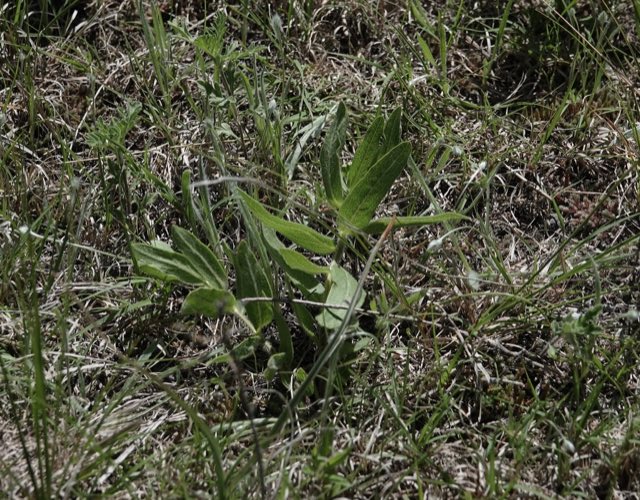
A tiny, shaggy-haired prairie milkweed only a few inches tall, with one cream flower cluster held on a short stalk. Conservation-listed across most of the upper Midwest.
Also called Side-cluster Milkweed.
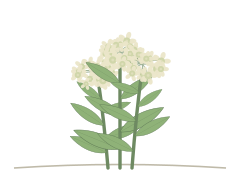
- Height
- 4 in–1 ft
- Spread
- 6 in–1 ft
- Flowers
- cream, green
- Bloom
- May to June
- Light
- Full sun
- Soil moisture
- Dry
- USDA zones
- 3–7
- Leaves
- Alternate, lanceolate
- Sap
- Milky latex
- Roots
- Deep taproot, resents transplanting
- Stratification
- 60 days cold-moist
- Range
- 10 states
When it flowers
Woolly Milkweed blooms May to June, peaking in June.
How to identify it
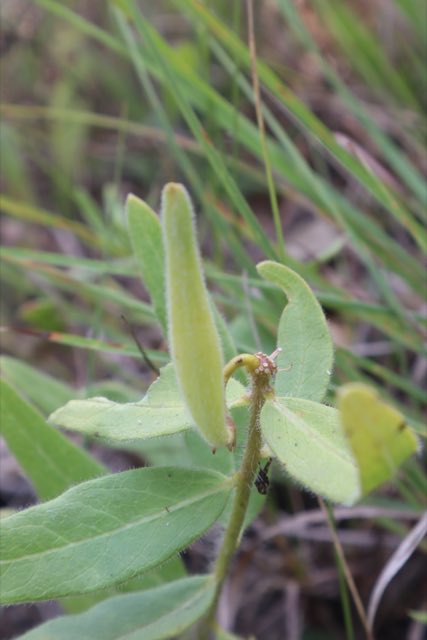
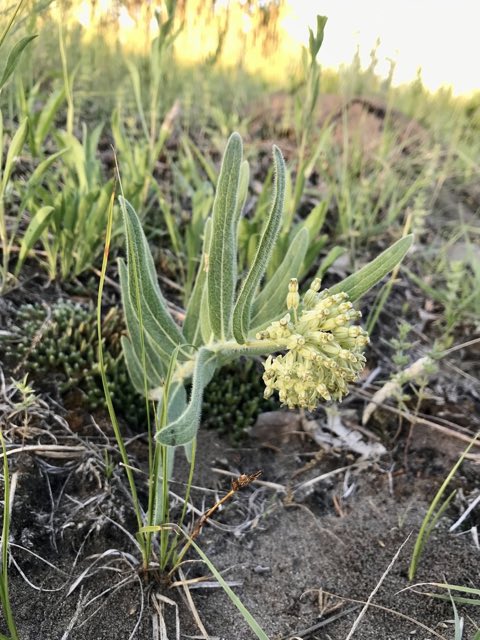
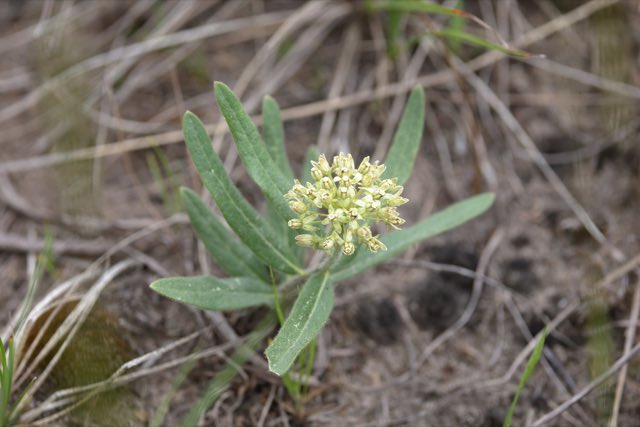
- Densely covered in long soft hairs throughout.
- Very short stature with a single cream-green flower cluster.
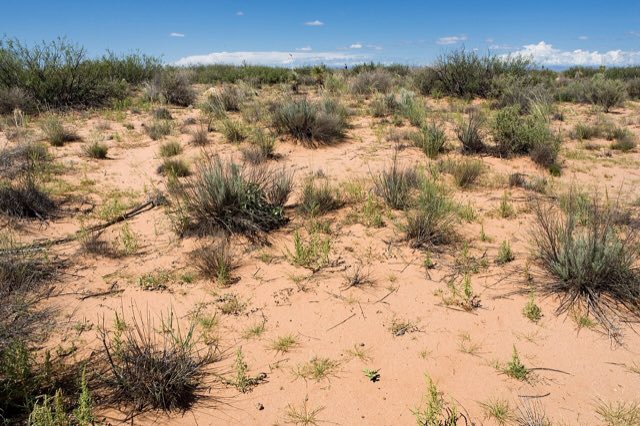
- Dry gravel prairie and hill prairie remnants.
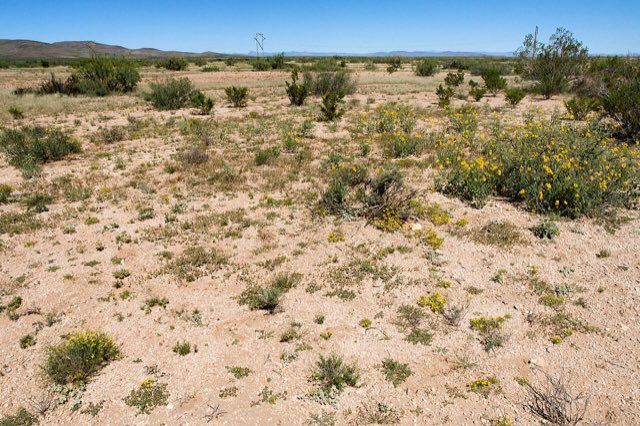
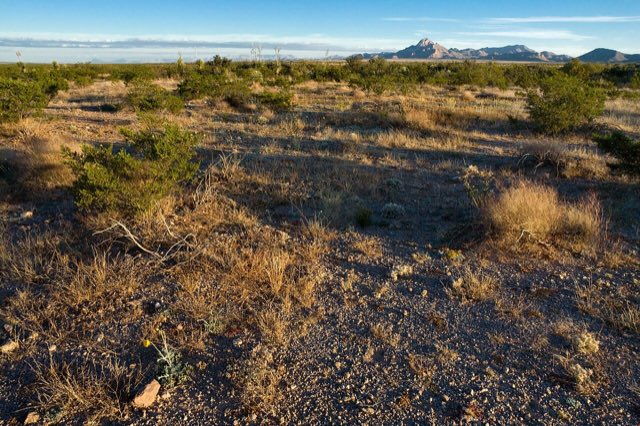
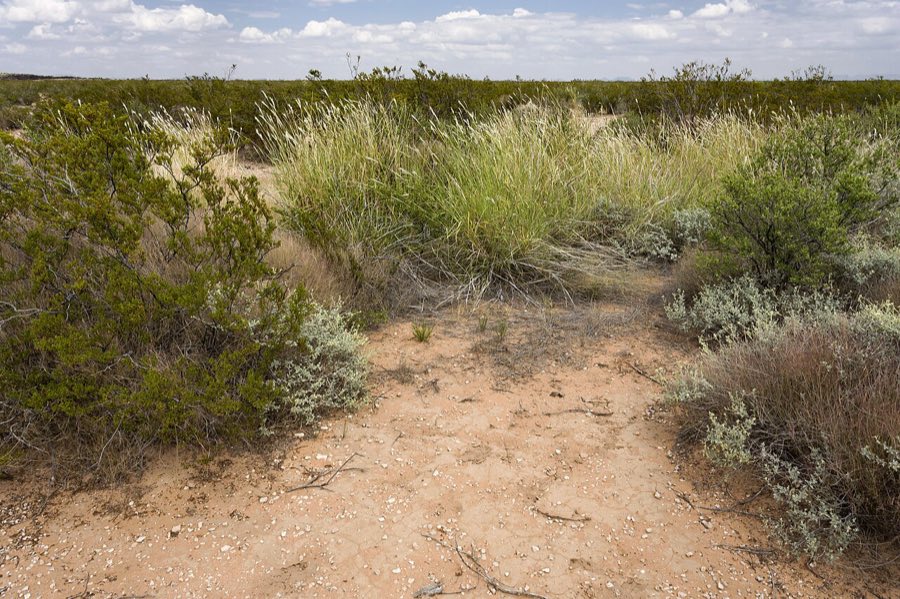
Ecology and wildlife value
A dry-prairie remnant indicator, lost wherever prairie has been converted or heavily grazed.
Growing woolly milkweed
Rare and difficult; leave wild populations undisturbed.
Seed needs about 60 days of cold-moist stratification. Deep taproot, resents transplanting. See how to plant milkweed seed for the full method.
Cautions
Listed as threatened or endangered in several Midwestern states. More on milkweed toxicity.
Where woolly milkweed grows
Recorded in 10 states: Iowa, Illinois, Kansas, Michigan, Minnesota, Missouri, North Dakota, Nebraska, South Dakota, Wisconsin.
Distribution is generalized to state level. For county-level maps see USDA PLANTS and BONAP.
References and further reading
Names, ranges and conservation status here are drawn from the databases below. Where those disagree with a regional flora, trust the flora.
- Plants of the World Online 329557-2. Royal Botanic Gardens, Kew. Accepted name, authorship and global distribution.
- GBIF 3170327. Global Biodiversity Information Facility. Aggregated occurrence records.
- iNaturalist 158745. Community observations, photographs and phenology.
- Wikipedia. General-audience article on this species.
- BONAP county distribution map. Biota of North America Program. County-level range map.
- NatureServe Explorer. Conservation status ranks at global and state level.
- World Flora Online. Nomenclature and synonymy.
- Woodson, R. E. (1954). The North American species of Asclepias L.. Annals of the Missouri Botanical Garden 41(1): 1–211. The monograph the modern taxonomy of the genus still rests on. View
- Flora of North America Editorial Committee (eds.) (2026). Flora of North America North of Mexico. Oxford University Press, New York and Oxford. Accepted names, keys and descriptions for the North American flora. View
- Royal Botanic Gardens, Kew (2026). Plants of the World Online. Facilitated by the Royal Botanic Gardens, Kew. Nomenclature and global distribution, keyed to IPNI name identifiers. View
- Kartesz, J. T. (Biota of North America Program) (2026). North American Plant Atlas. BONAP, Chapel Hill, North Carolina. County-level distribution maps, the basis for the ranges generalized here. View
- USDA, NRCS (2026). The PLANTS Database. National Plant Data Team, Greensboro, North Carolina. State-level distribution, wetland status and nomenclature. View
- Agrawal, A. A. (2017). Monarchs and Milkweed: A Migrating Butterfly, a Poisonous Plant, and Their Remarkable Story of Coevolution. Princeton University Press. The standard general account of the milkweed and monarch relationship. View
Cite this page
This page is licensed CC BY 4.0. Quote it, adapt it and reuse it, including commercially, as long as you credit Milkweed USA and link back.
Milkweed USA. (2026). Woolly Milkweed (Asclepias lanuginosa). Retrieved DATE, from https://milkweedusa.com/species/woolly-milkweed/
"Woolly Milkweed (Asclepias lanuginosa)." Milkweed USA, 2026, https://milkweedusa.com/species/woolly-milkweed/. Accessed DATE.
Milkweed USA. "Woolly Milkweed (Asclepias lanuginosa)." Last modified 2026-08-01. Accessed DATE. https://milkweedusa.com/species/woolly-milkweed/.
@misc{milkweedusa_specieswoollymilkweed,
  title  = {Woolly Milkweed (Asclepias lanuginosa)},
  author = {{Milkweed USA}},
  year   = {2026},
  url    = {https://milkweedusa.com/species/woolly-milkweed/},
  note   = {Accessed DATE}
}