Butterfly Weed
Asclepias tuberosa L.
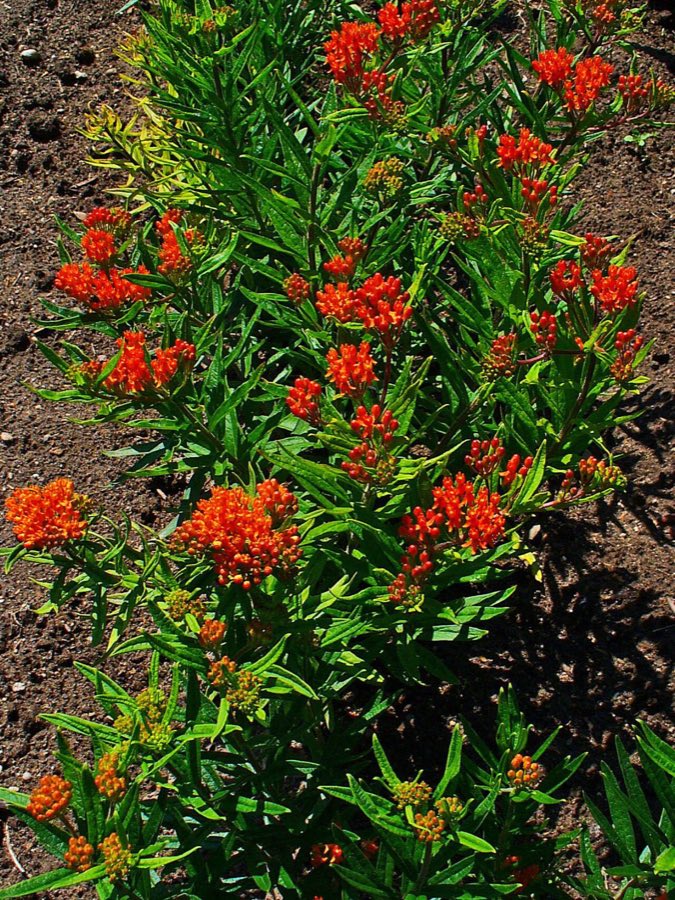
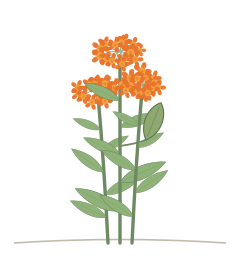
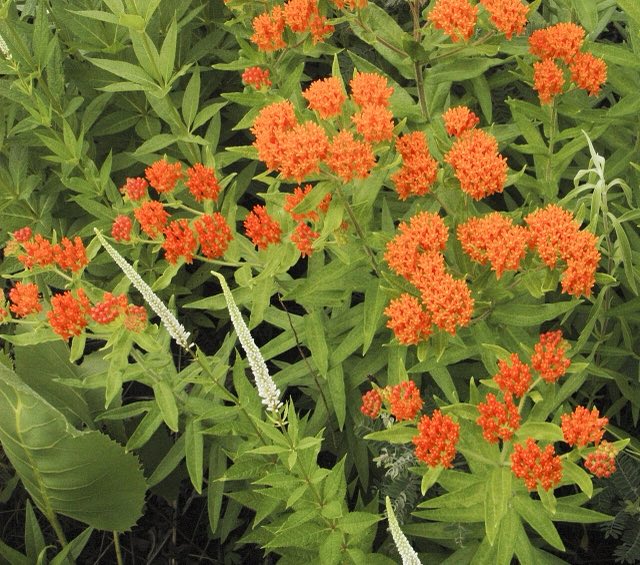
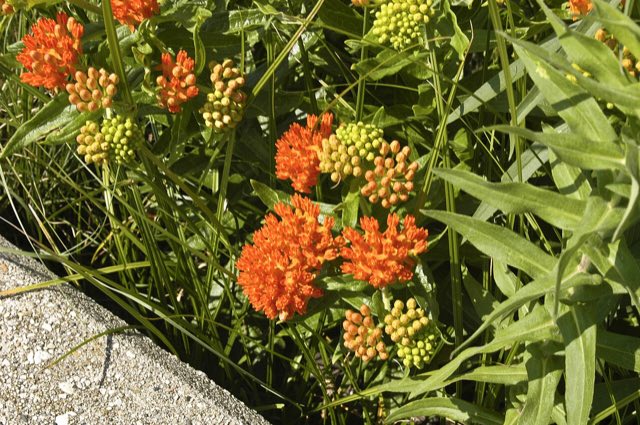
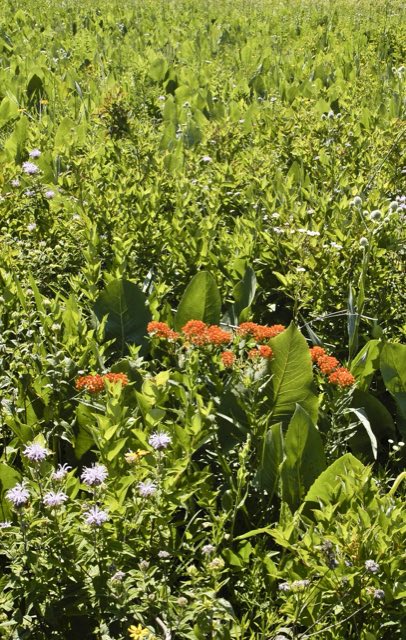
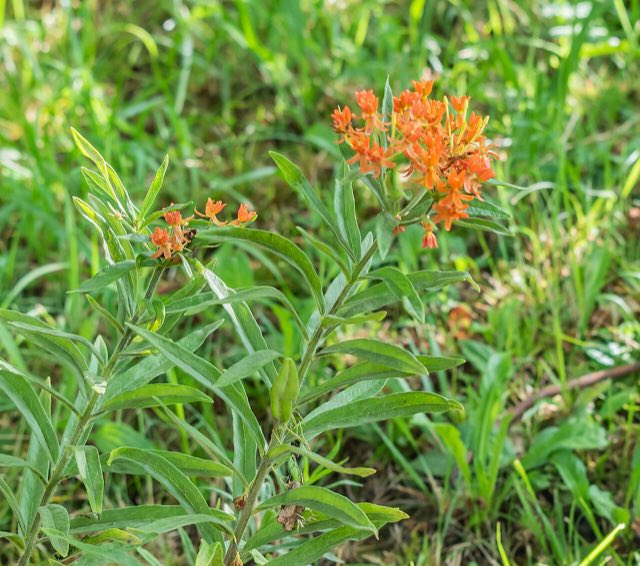
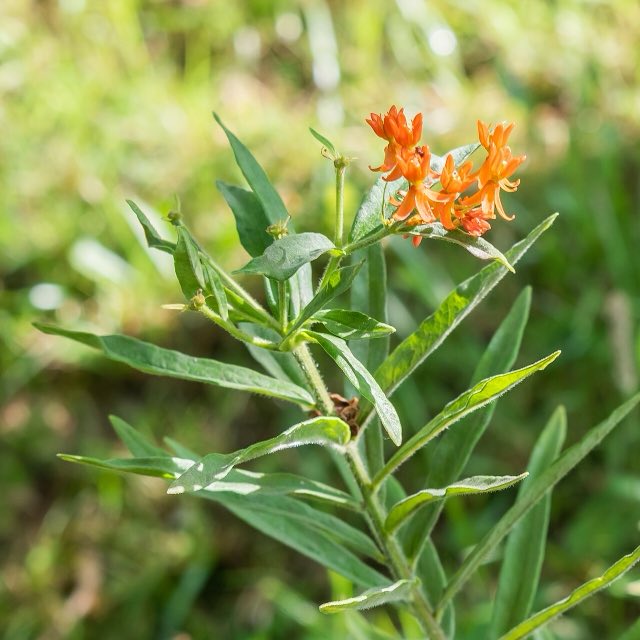
The one milkweed almost everyone recognizes: flat-topped clusters of brilliant orange flowers on a stiff, hairy, knee-high clump. It is the most garden-worthy species in the genus: tidy, drought-proof, long-lived and unbothered by anything except wet soil. It is also the odd one out in the family, with alternate leaves and watery rather than milky sap.
Also called Butterfly Milkweed, Orange Milkweed, Pleurisy Root, Chigger Flower.
- Height
- 1 ft–3 ft
- Spread
- 1 ft–2 ft
- Flowers
- orange, yellow, red
- Bloom
- May to September
- Light
- Full sun
- Soil moisture
- Dry, Average
- USDA zones
- 3–9
- Leaves
- Alternate, lanceolate
- Sap
- Clear (unusual)
- Roots
- Deep taproot, resents transplanting
- Stratification
- 30 days cold-moist
- Range
- 43 states
When it flowers
Butterfly Weed blooms May to September, peaking in June and July.
How to identify it
- Sap is clear or barely cloudy. It is the only common North American milkweed that does not bleed white latex when a leaf is pulled.
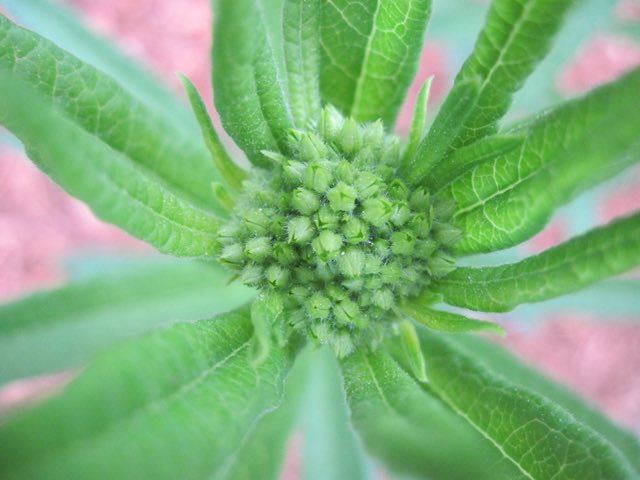
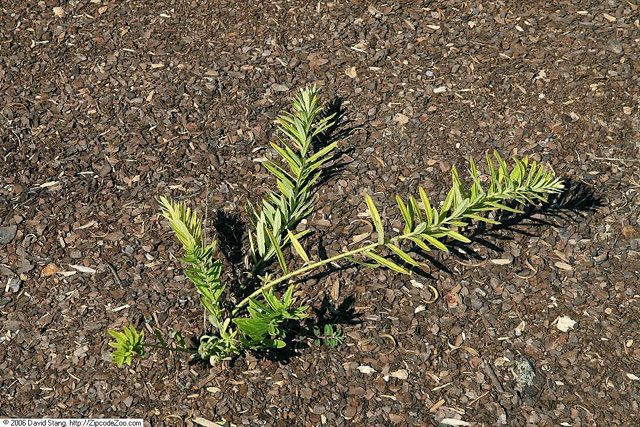
- Leaves are alternate and stalkless, not paired opposite each other as in most milkweeds.
- Stems and leaves are noticeably rough-hairy; the whole plant feels sandpapery.
- Flowers range from yellow through pumpkin to nearly scarlet, often varying between plants in a single population.
Ecology and wildlife value
Butterfly weed is a nectar powerhouse. The shallow flowers are worked by fritillaries, swallowtails, hairstreaks, bumble bees and hundreds of small native bees. Monarchs lay on it readily, though the narrow leaves support fewer caterpillars per plant than the big-leaved species. Its clear sap is also lower in cardenolides than most milkweeds, which makes it a milder host.
Growing butterfly weed
Give it sun and sharp drainage and it will outlive you; give it clay that stays wet in winter and it will rot. The deep taproot means it hates being moved once established, so plant it small or sow it in place. It emerges very late in spring, so mark the spot to avoid digging it up. No staking, no dividing, no feeding.
Seed needs about 30 days of cold-moist stratification. Deep taproot, resents transplanting. See how to plant milkweed seed for the full method.
Cautions
Cardiac glycosides are present but low. Livestock avoid it. The old herbal name "pleurisy root" reflects historical medicinal use, not a safety endorsement. Do not ingest it. More on milkweed toxicity.
Where butterfly weed grows
Recorded in 43 states: Alabama, Arkansas, Arizona, Colorado, Connecticut, District of Columbia, Delaware, Florida, Georgia, Iowa, Illinois, Indiana, Kansas, Kentucky, Louisiana, Massachusetts, Maryland, Maine, Michigan, Minnesota, Missouri, Mississippi, North Carolina, North Dakota, Nebraska, New Hampshire, New Jersey, New Mexico, New York, Ohio, Oklahoma, Pennsylvania, Rhode Island, South Carolina, South Dakota, Tennessee, Texas, Utah, Virginia, Vermont, Wisconsin, West Virginia, Wyoming.
Distribution is generalized to state level. For county-level maps see USDA PLANTS and BONAP.
Frequently asked questions
Is butterfly weed the same as milkweed?
Yes. Butterfly weed (Asclepias tuberosa) is one of roughly 75 milkweed species in North America. The confusion comes from its clear sap and orange flowers, which look nothing like the pink drooping umbels of common milkweed.
Why is my butterfly weed not coming up in spring?
It is famously the last perennial in the bed to break dormancy, often four to six weeks after everything else. In cold regions it may not appear until late May or June. Do not dig, do not water heavily, and do not give up before midsummer.
Can I move an established butterfly weed?
Rarely with success. The taproot can go two to three feet down and resents disturbance. If you must move it, do so in early spring as growth begins, dig far wider and deeper than feels reasonable, and expect a lost season.
References and further reading
Names, ranges and conservation status here are drawn from the databases below. Where those disagree with a regional flora, trust the flora.
- Plants of the World Online 94704-1. Royal Botanic Gardens, Kew. Accepted name, authorship and global distribution.
- GBIF 3170305. Global Biodiversity Information Facility. Aggregated occurrence records.
- iNaturalist 47912. Community observations, photographs and phenology.
- Wikipedia. General-audience article on this species.
- BONAP county distribution map. Biota of North America Program. County-level range map.
- NatureServe Explorer. Conservation status ranks at global and state level.
- World Flora Online. Nomenclature and synonymy.
- Woodson, R. E. (1954). The North American species of Asclepias L.. Annals of the Missouri Botanical Garden 41(1): 1–211. The monograph the modern taxonomy of the genus still rests on. View
- Flora of North America Editorial Committee (eds.) (2026). Flora of North America North of Mexico. Oxford University Press, New York and Oxford. Accepted names, keys and descriptions for the North American flora. View
- Royal Botanic Gardens, Kew (2026). Plants of the World Online. Facilitated by the Royal Botanic Gardens, Kew. Nomenclature and global distribution, keyed to IPNI name identifiers. View
- Kartesz, J. T. (Biota of North America Program) (2026). North American Plant Atlas. BONAP, Chapel Hill, North Carolina. County-level distribution maps, the basis for the ranges generalized here. View
- USDA, NRCS (2026). The PLANTS Database. National Plant Data Team, Greensboro, North Carolina. State-level distribution, wetland status and nomenclature. View
- Agrawal, A. A. (2017). Monarchs and Milkweed: A Migrating Butterfly, a Poisonous Plant, and Their Remarkable Story of Coevolution. Princeton University Press. The standard general account of the milkweed and monarch relationship. View
Cite this page
This page is licensed CC BY 4.0. Quote it, adapt it and reuse it, including commercially, as long as you credit Milkweed USA and link back.
Milkweed USA. (2026). Butterfly Weed (Asclepias tuberosa). Retrieved DATE, from https://milkweedusa.com/species/butterfly-weed/
"Butterfly Weed (Asclepias tuberosa)." Milkweed USA, 2026, https://milkweedusa.com/species/butterfly-weed/. Accessed DATE.
Milkweed USA. "Butterfly Weed (Asclepias tuberosa)." Last modified 2026-08-01. Accessed DATE. https://milkweedusa.com/species/butterfly-weed/.
@misc{milkweedusa_speciesbutterflyweed,
  title  = {Butterfly Weed (Asclepias tuberosa)},
  author = {{Milkweed USA}},
  year   = {2026},
  url    = {https://milkweedusa.com/species/butterfly-weed/},
  note   = {Accessed DATE}
}